Every Feature,
One Purpose.
Built for the athlete who knows the mental game matters — and wants the tools to actually train it.
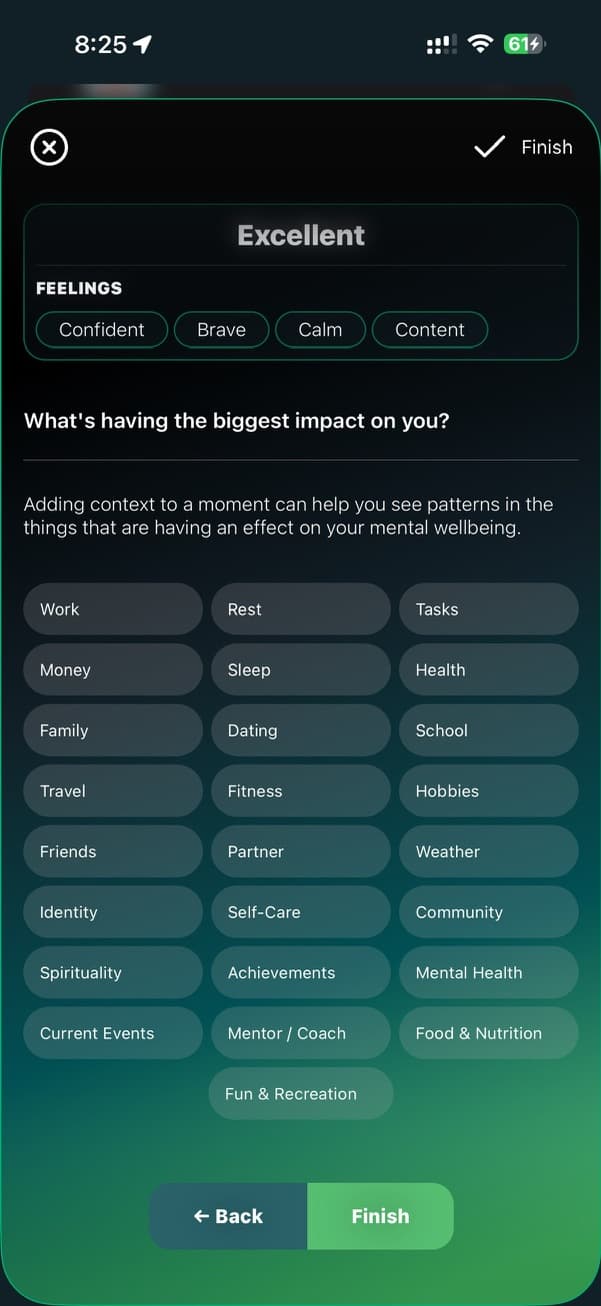
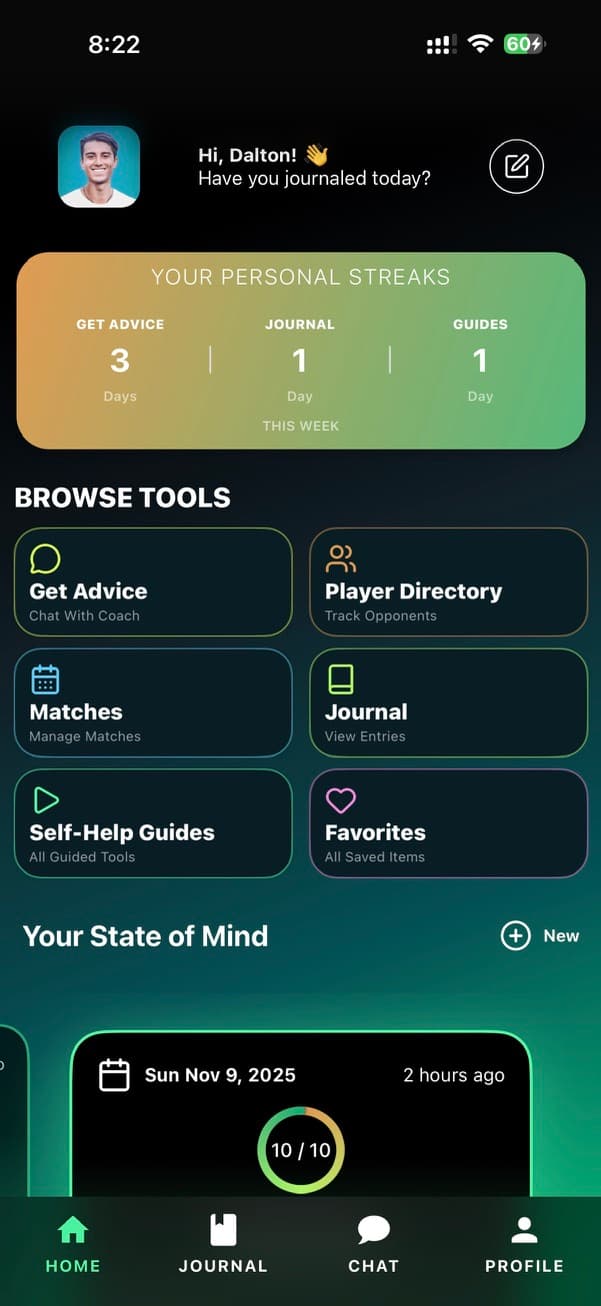
Daily Check-In
Streak: 14 days
Session Ready
Confidence · 5 min
Name it. Tame it. Move forward.
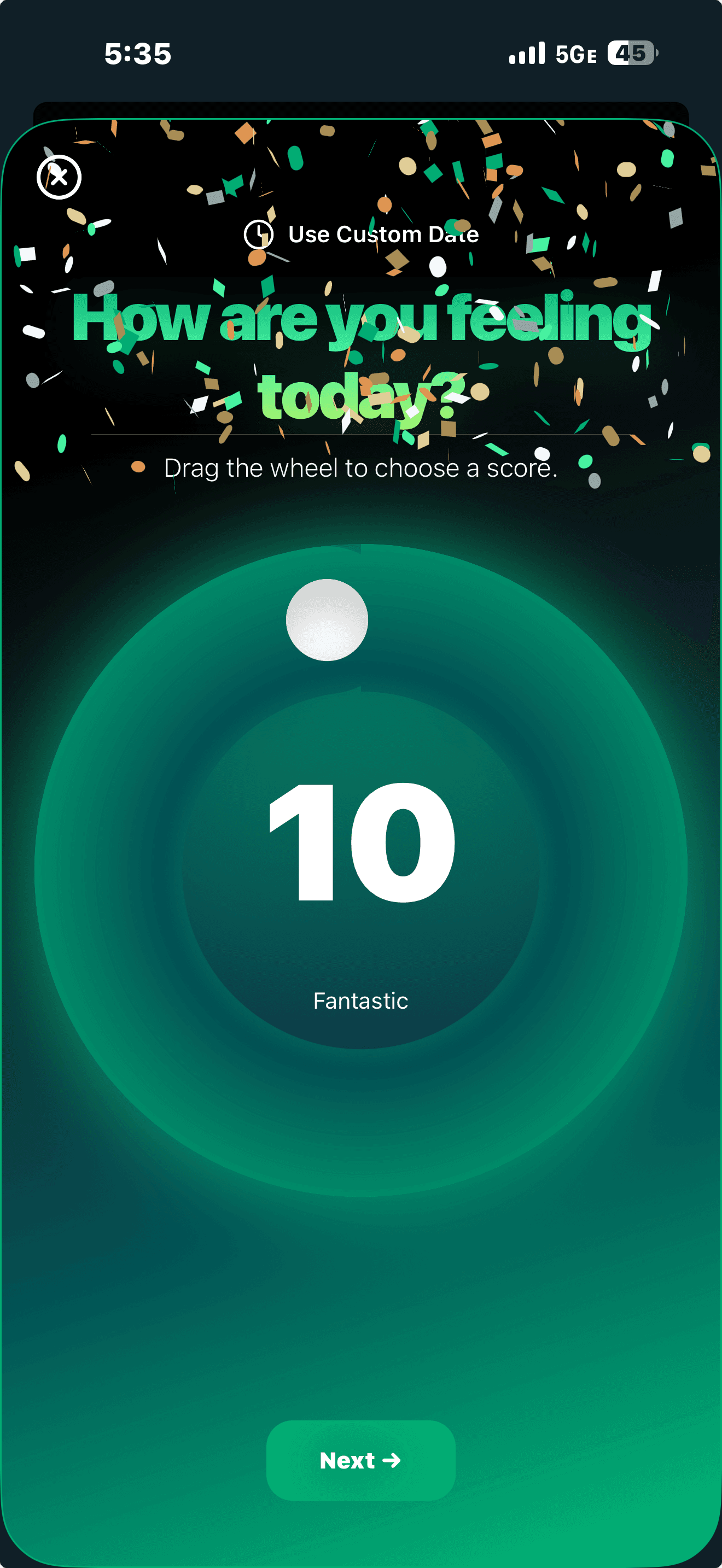
Athletes don't arrive to practice or matches as blank slates — they arrive with emotions. The Mood Wheel gives them a fast, visual way to check in before they step on court.
- Focused
- You're in a peak state. Focused athletes compete from the inside out. Stay in the present moment, trust your training, and let each point be its own world.
- Confident
- Lean into this energy. Confidence is built on evidence. Attack your game plan with conviction — your past work brought you here. Play to your strengths.
- Calm
- The most powerful state. Calm is not passive — it's controlled power. Use this as your performance anchor. The best athletes compete from exactly this place.
- Happy
- Carry this lightness in. Joy is your most natural game. Stay loose, play free, and enjoy every moment on court. The best tennis often comes from pure enjoyment.
- Nervous
- Reframe this as excitement. Nerves and excitement feel identical in the body. Reframe: "I'm excited to compete." Use a pre-match routine to channel this energy positively.
- Anxious
- Channel this into preparation. Anxiety is a signal that this matters to you. Use it as fuel: focus on your routines, your footwork, your first few shots. Control what you can.
- Frustrated
- A reset is always available. One breath. One point. Frustration passes quickly when you let it move through you. Reset your posture, reset your intention, take the next point.
- Tired
- Identify the source first. Mental or physical? Both can be managed differently. Conserve energy intelligently, compete on muscle memory, and stay within your game.
Tap an emotion to explore ↓
you feeling?
This simple act of awareness helps athletes regulate faster, reset more easily, and transition into a performance mindset. Awareness starts everything.
Drag the wheel to choose a score.
5
Neutral
Reflection without friction.
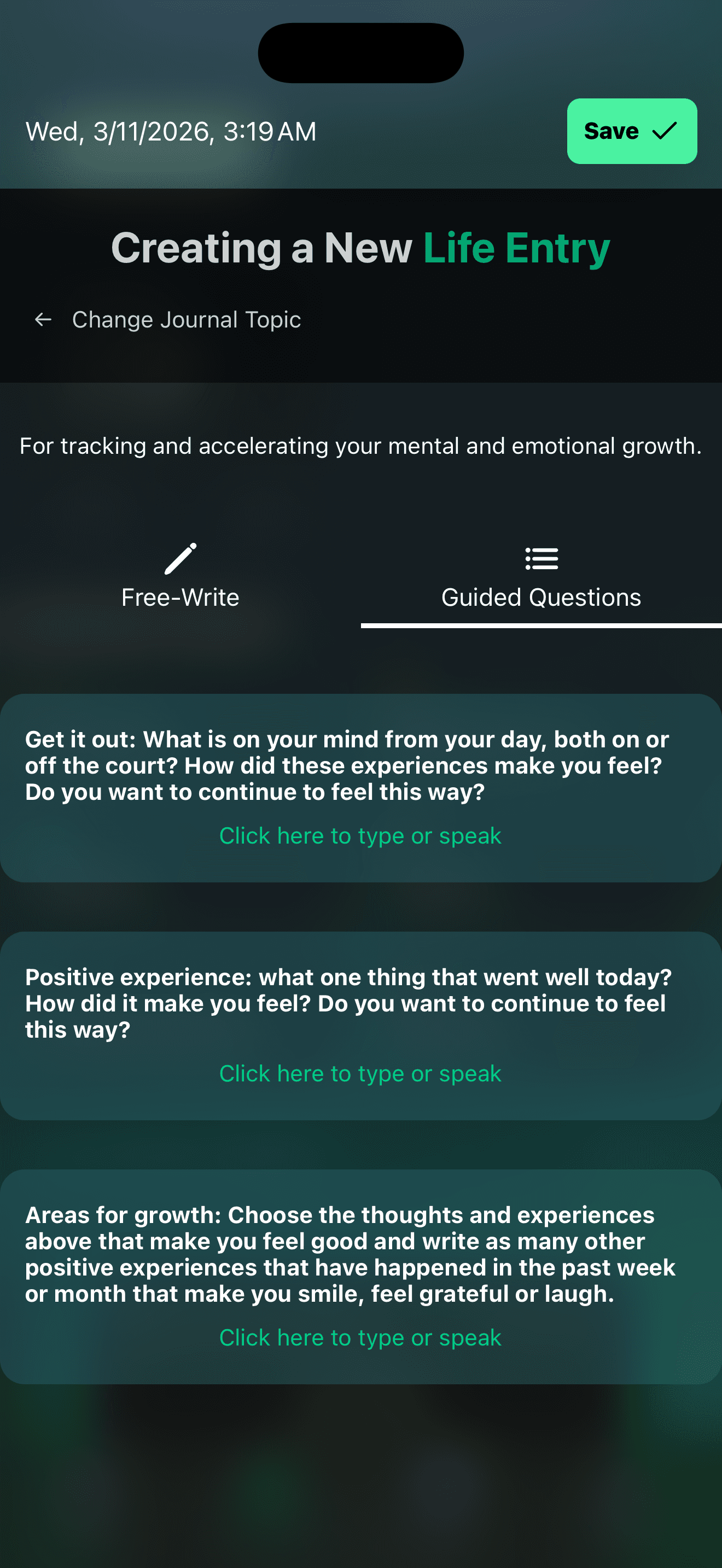
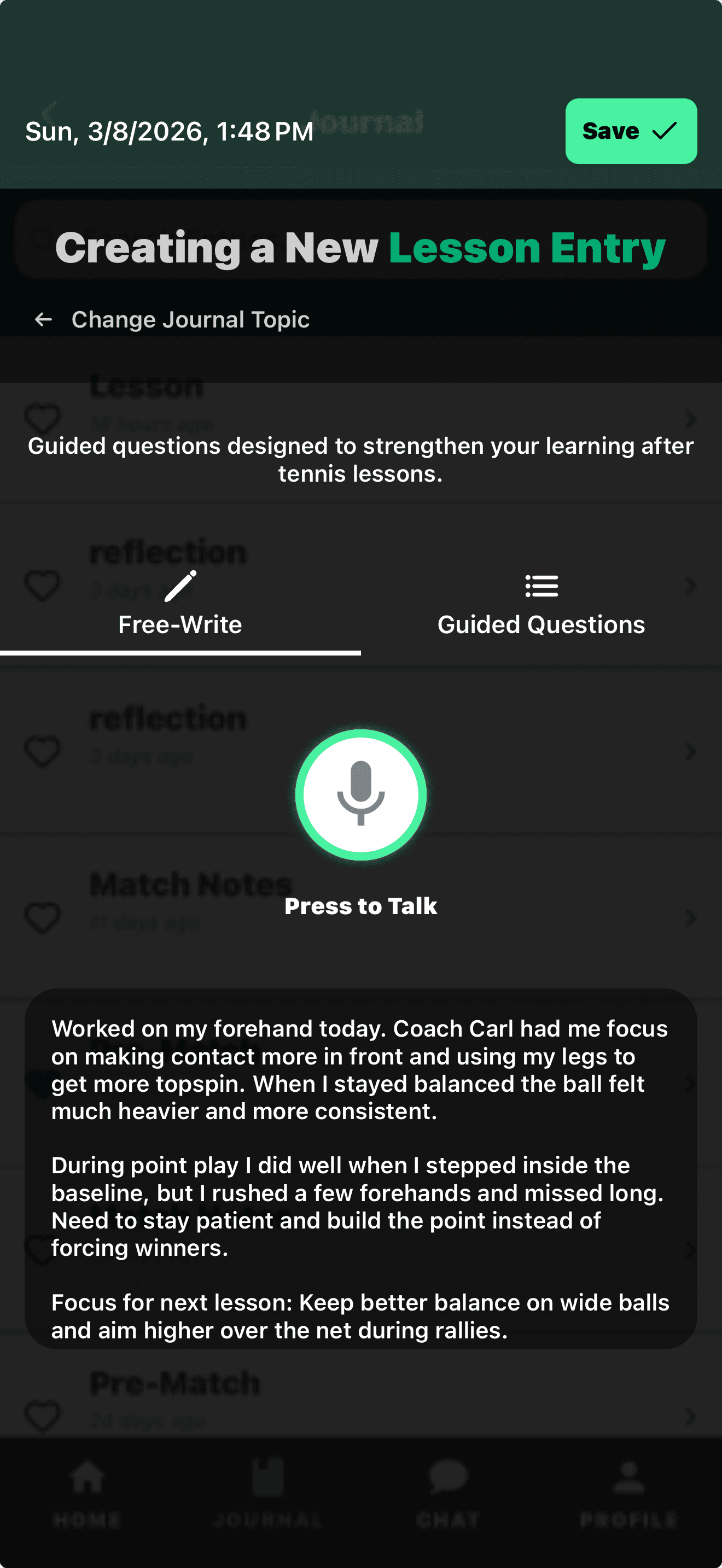
Journaling is one of the most effective tools in performance psychology — but only if athletes actually do it. Tennis IQ makes it quick and structured, turning reflection into a habit.
Over time, it creates a personal record of growth, patterns, and progress — a story of development that belongs entirely to the athlete.
A habit, not a chore.
Structured prompts and voice input lower the barrier — so athletes actually journal after matches instead of skipping it.
Post-Match Reflection
Pre-Tournament Thoughts
Feeling nervous but focused on my routines and first-serve placement. Reviewed my player notes on my first-round opponent — she likes to rush the net early.
Practice Notes
Worked on staying calm during long baseline rallies. Coach noticed my footwork improving when I focus on breathing between points instead of rushing.
Mental training, personalized daily.
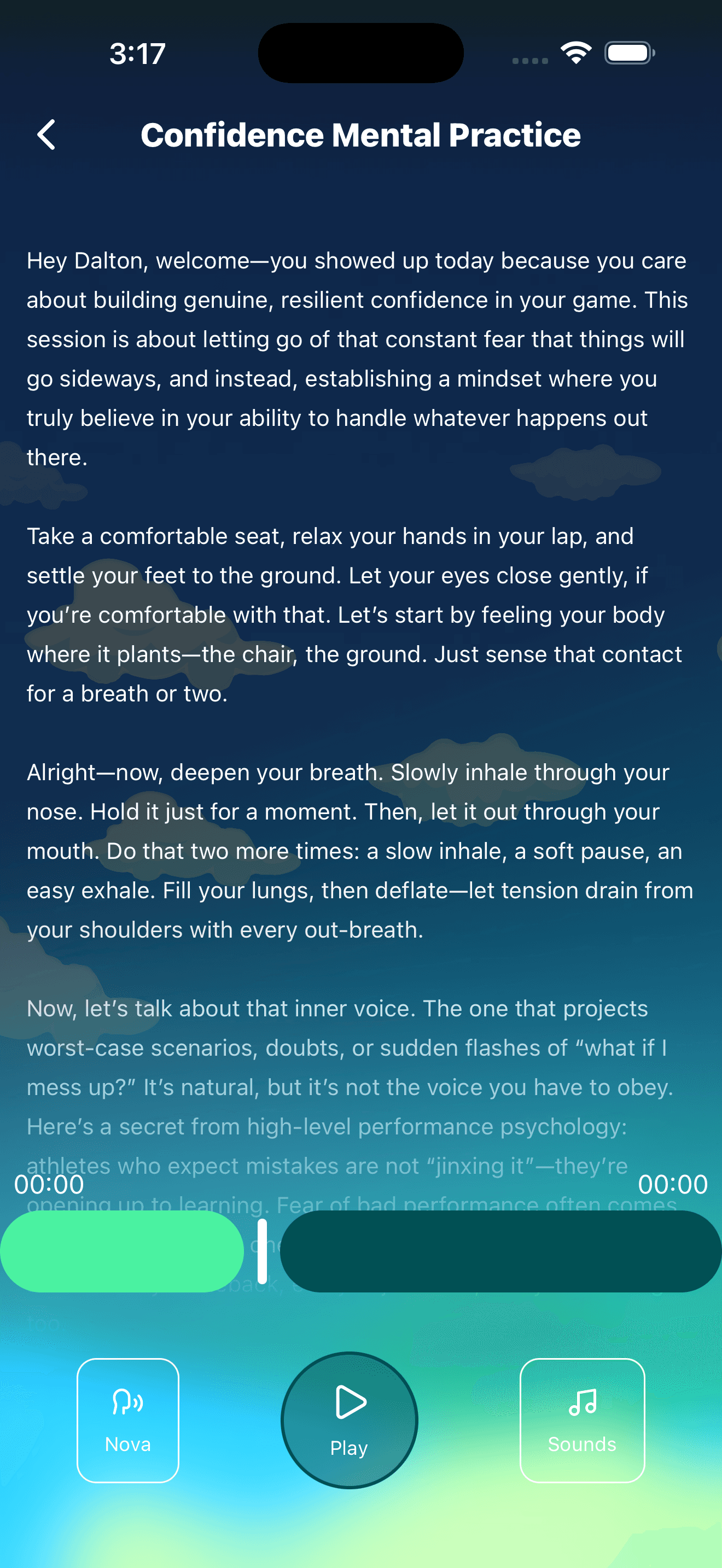
Based on what a player logs, Tennis IQ delivers short, guided mindset sessions tailored to exactly what they need. Each session is uniquely customized.
Sessions tailored to what you need
Confidence
Rebuild self-belief after tough losses and step on court knowing you belong.
Focus
Train your attention to stay locked in during critical points and long rallies.
Emotional Control
Manage frustration, anxiety, and nerves in the heat of competition.
Match Preparation
Develop pre-match routines that put you in the ideal mindset to compete.
Recovery
Process match experiences constructively so you can reset and move forward.
Confidence · 5 min
Rebuild self-belief after tough losses and step on court knowing you belong.
How it works
Tennis IQ starts by understanding where you are — mentally and emotionally.
Based on your current state, you get a short, personalized mindset session.
Each session helps you move from awareness to intention, ready to compete.
Know the context. Play smarter.
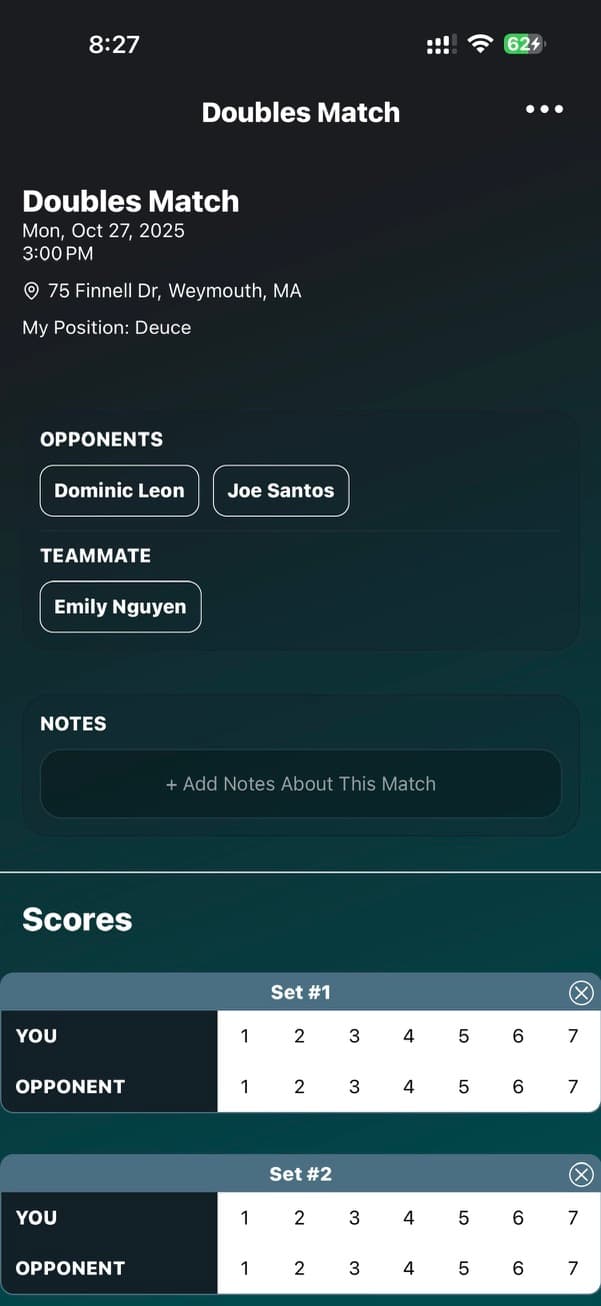
The Player Directory helps athletes keep track of everyone they compete and train with — opponents, teammates, and hitting partners — without relying on memory alone.
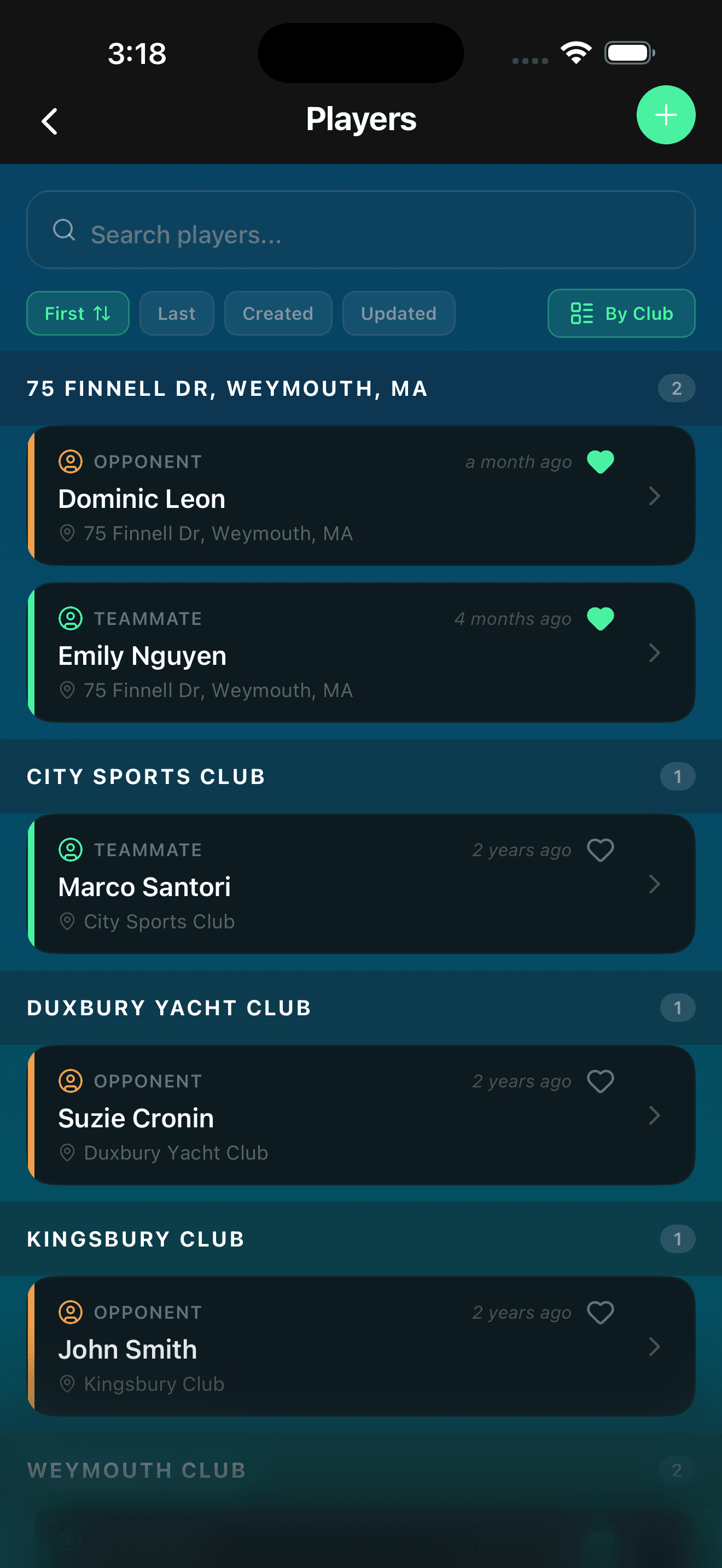
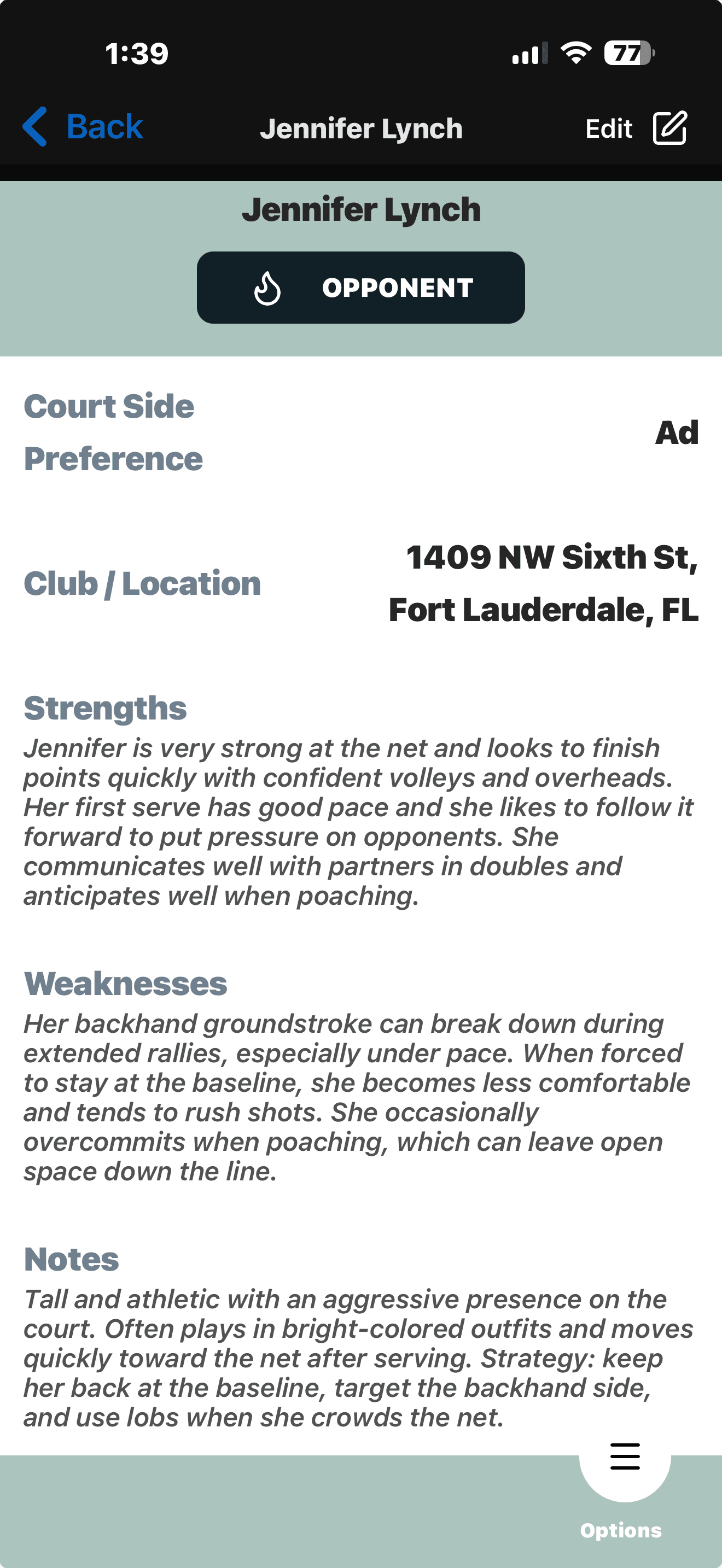
Alex R.
OpponentStrengths
Weaknesses
Key Tendency
“Gets aggressive when up in score. Tends to rush the net prematurely on big points.”
Notes
Strong first serve, weaker backhand return under pressure
Strategy Insight
Target the backhand return side with heavy topspin. Attack when he's at the net — his backhand volley is inconsistent under pressure. Stay patient in baseline rallies and force him to move laterally.
Jordan K.
Hitting PartnerStrengths
Weaknesses
Key Tendency
“Prefers crosscourt exchanges and outlasting opponents from the baseline.”
Notes
Consistent baseline player with elite-level endurance
Strategy Insight
Use Jordan for endurance drilling and crosscourt pattern work. Focus on down-the-line patterns to build court geometry. Great practice partner for mental stamina sessions.
Sam T.
TeammateStrengths
Weaknesses
Key Tendency
“Prefers deuce court in doubles. Moves well laterally and reads the net.”
Notes
Excellent doubles partner with strong communication
Strategy Insight
Leverage Sam's net presence by serving wide in the deuce court to open angles. Strong together on formation serves. Communicate early on lobs — his overhead can be exploited.
Capture observations
Note key details as you notice them — before they fade from memory.
Track tendencies
Build a living record of patterns, strengths, and weaknesses over time.
Prepare smarter
Review your notes before matches and walk on court with a strategic edge.
It's All Connected
Tennis IQ learns the athlete — not just the moment. By connecting daily check-ins, reflections, and match experiences, the app evolves alongside the player.
5
Interconnected Features
∞
Personalized Insights
1
Athlete at the Center
Your mindset.
Over time.
Check In
Mood Wheel
Awareness starts everything
Reflect
Journaling & Notes
Thoughts, emotions, patterns
Compete
Matches
Real experiences add context
Observe
Player Insights
People, tendencies, environments
Grow
Clarity · Confidence · Control
Track meaningful progress
Personalize
Guided Sessions
Support adapts to what's needed
Your mindset.
Over time.
Check In
Mood Wheel
Awareness starts everything
Reflect
Journaling & Notes
Thoughts, emotions, patterns
Compete
Matches
Real experiences add context
Observe
Player Insights
People, tendencies, environments
Grow
Clarity · Confidence · Control
Track meaningful progress
Personalize
Guided Sessions
Support adapts to what's needed
Nothing works in isolation. Each interaction adds context, helping Tennis IQ respond more thoughtfully over time. The result is support that feels increasingly personal — because it's shaped by the athlete's own experience.
Ready to Train Smarter?
Every feature. One purpose.
Your mental edge.
Tennis IQ is the always-on mental performance coach built for tennis athletes. Download free and start building your edge today.
“The Mood Wheel changed how I show up to every match.”
Junior player, 16
“I finally have a record of my mental progress, not just match results.”
USTA tournament player